How American BBQ Evolving Regional Styles Are Changing Your Backyard Menu in 2026
The smoke signals are unmistakable this summer: American BBQ evolving regional styles aren’t just history lessons anymore—they’re live, shifting forces reshaping what’s on your plate. Steven Raichlen’s recent “crystal ball” forecast for 2026 nailed it when he predicted that hyper-local smoke profiles and cross-regional borrowing would define the next decade of barbecue. Walk into any serious backyard cookout from Austin to Asheville and you’ll find Carolina vinegar mingling with Texas post-oak, or Memphis dry rub getting slapped on cuts that would’ve gotten laughed out of the Lone Star State twenty years ago.
This isn’t fusion for fusion’s sake. It’s something more interesting: pitmasters who grew up with one tradition are now traveling, competing, and sharing secrets on social media at a pace that makes the old regional boundaries look like faded highway maps. The result? A barbecue landscape where knowing your local style is still essential—but understanding how it’s evolving separates the weekend warrior from the cook who actually gets invited back.
The Four Pillars Still Matter (But Nobody’s Staying in Their Lane)
Let’s start with what hasn’t changed. The major American BBQ regional styles—Texas, Carolina, Kansas City, and Memphis—still provide the foundation. What you choose to cook, how you sauce it (or don’t), and what wood you burn still trace back to these traditions.
- Texas: Beef brisket, salt-and-pepper rub, post-oak or mesquite, sauce on the side if at all
- Carolina: Whole hog (eastern) or pork shoulder (western), vinegar-pepper sauce, minimal to no sugar
- Kansas City: “Burnt ends,” thick sweet tomato-molasses sauce, apply liberally
- Memphis: Pork ribs, dry rubs with paprika base, “wet” or “dry” preparation options
Here’s where it gets interesting. The 2024 National Barbecue Association reported that 67% of competition teams now identify as “multi-regional” in their approach, up from just 31% in 2015. That statistic isn’t just about contests—it’s filtering down to backyard cooks who watch YouTube breakdowns of Aaron Franklin’s brisket trim one day and Rodney Scott’s whole hog technique the next.
The New Hybrid Styles You Can Actually Try This Weekend
American BBQ evolving regional styles isn’t academic theory. It’s showing up in specific, repeatable techniques you can adopt without a custom-built smoker or a pilgrimage to the barbecue belt.
Alabama White Sauce Goes National
What started as a chicken-specific condiment in Decatur, Alabama—mayonnaise, vinegar, black pepper, horseradish—has broken containment. In 2026, you’re seeing it on smoked turkey legs, as a brisket drizzle in Portland, and thinned out as a pork shoulder finishing glaze in Denver. The key adaptation: modern versions are cutting the mayo with buttermilk or Greek yogurt for better smoke adhesion and less cloying richness.
Carolina-Style Whole Hog Techniques Applied to Smaller Cuts
Rodney Scott’s open-pit method—burning hardwood down to coals, then cooking over live embers with frequent flipping and mopping—traditionally requires a 150-pound pig and serious real estate. Home cooks are now scaling this to 6-8 pound pork shoulders using kettle grills with coal baskets separated for indirect heat. The signature vinegar-pepper mop gets applied every 20 minutes instead of every 30, compensating for faster cooking. Result? That same crackling, deeply rendered bark and tangy interior, finished in 8 hours instead of 14.
Texas-Carolina “Hot Guts” Sausage Revival
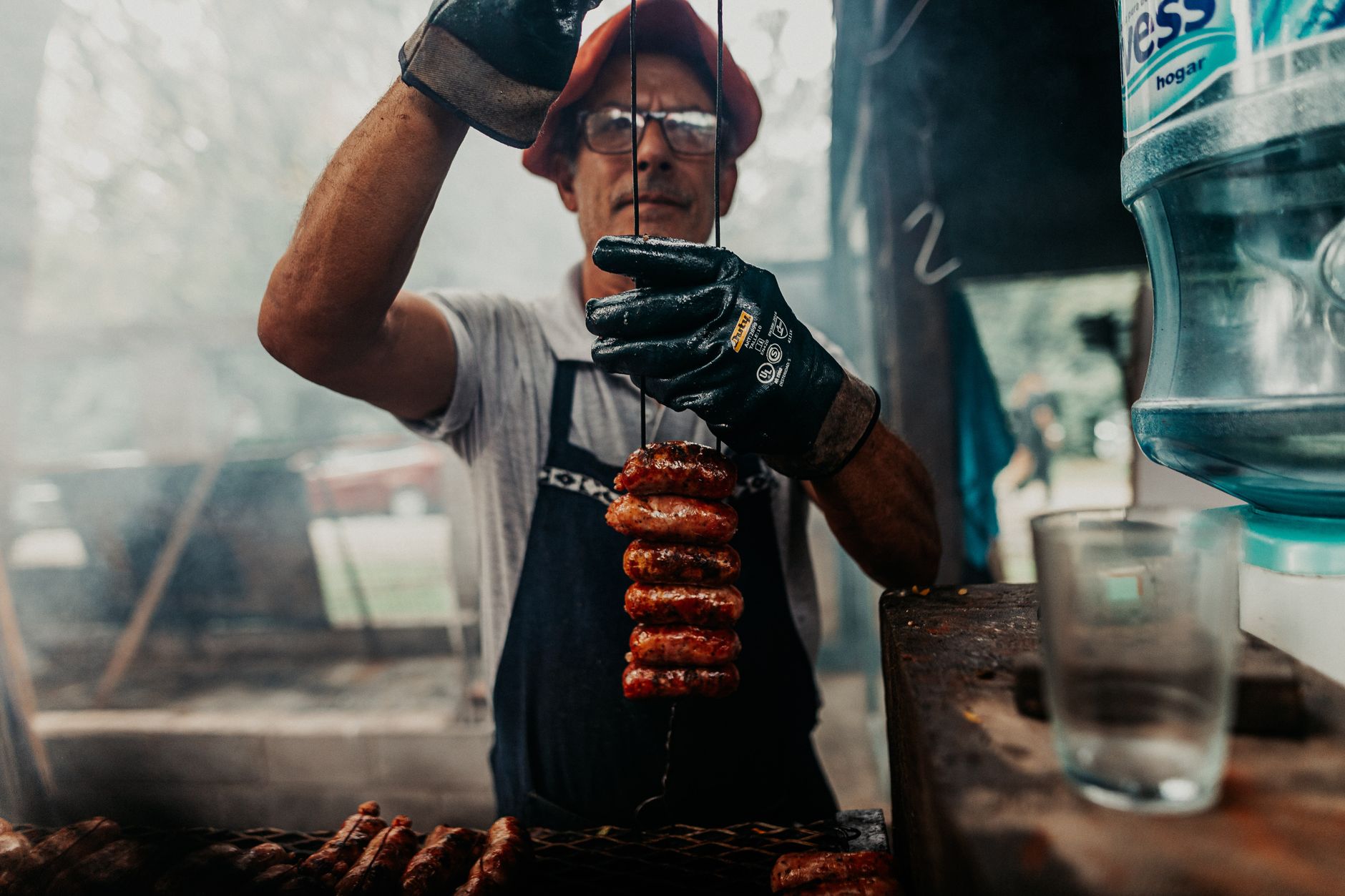
Central Texas Czech-and-German-influenced sausage tradition is colliding with eastern Carolina’s love of vinegar heat. Small-batch pitmasters are stuffing coarse-ground pork with heavy black pepper and red pepper flake, then finishing with a post-smoke dip in warm vinegar-pepper sauce. The casing stays snappy, the interior stays juicy, and you get two regional signatures in one bite.
The Wood Movement: Beyond Mesquite and Hickory
Fuel choice was once the most regionally locked element of barbecue. Not anymore. Improved shipping and specialty suppliers have democratized access, and American BBQ evolving regional styles now includes deliberate wood blending that would confuse purists from any single tradition.
| Regional Base | Trending Addition | Effect |
|---|---|---|
| Texas post-oak | 20% pecan | Sweeter smoke ring, milder finish |
| Carolina hickory | 15% apple or peach | Fruit note cuts pork richness |
| Kansas City hickory | 10% cherry | Deeper color on competition ribs |
| Memphis oak | 25% sugar maple | Faster bark formation |
Practical tip: Don’t mix woods blindly. Start with your base fuel for 75% of the cook, then introduce the secondary wood during the final 2-3 hours when smoke absorption is most active. This prevents muddled flavors and gives you the targeted finish you want.
The Equipment Shift Enabling Regional Experimentation
You can’t talk about evolving styles without acknowledging the gear. Pellet grills—once dismissed by traditionalists—have become the gateway drug for regional exploration. Their precise temperature control and programmable smoke profiles let a Kansas City cook simulate the temperature swings of a Texas offset smoker, or give a Carolina novice the steady 225°F needed for proper pork shoulder without constant fire management.
More significantly, the flat-top griddle boom (which we’ve covered separately) has created an unexpected bridge. Cooks are now finishing smoked meats on screaming-hot griddle surfaces—Memphis-style dry-rubbed ribs getting a final sear, or Alabama white sauce chicken picking up caramelization that open-pit cooking alone can’t achieve. It’s not traditional by any strict definition, but it’s delicious and it’s spreading.
The numbers back this up: Traeger’s 2025 user survey showed that 42% of pellet grill owners had attempted at least two distinct regional styles in the previous year, compared to 19% of offset smoker owners. Accessibility drives experimentation.
Reading the Smoke: What to Watch in 2027
If you want to stay ahead of where American BBQ evolving regional styles are headed, pay attention to three developing signals:
1. The “Micro-Regional” Dig
Just as craft beer went from “West Coast IPA” to “Galaxy-hopped, water-profiled, single-batch” specificity, barbecue is drilling down. We’re seeing “East Texas” distinguished from “Central Texas” in mainstream conversation, and “Lexington-style” western Carolina getting separated from “Piedmont” preparations that use slightly more tomato in the sauce. This granularity matters for authenticity claims—and for your own recipe development.
2. Indigenous and Pre-Industrial Techniques
Open-pit cooking, basting with herb branches, and clay-pot smoking are being researched and revived by chefs and serious home cooks. These aren’t “regional” in the modern American sense, but they’re geographically specific and predate the four-pillar system. They’ll influence the next wave of hybrid styles.
3. Global Ingredient Integration
Raichlen’s 2026 forecast emphasized this, and it’s accelerating: not fusion dishes, but fusion ingredients within American frameworks. Think gochugaru in a Memphis dry rub, or fermented black bean in a Kansas City sauce base. The regional structure holds; the flavor vocabulary expands.
Your Action Plan: Master One, Borrow Two
The best approach to this evolving landscape isn’t to chase every trend. It’s strategic regional literacy:
-
Master your nearest tradition—the one whose climate, available meats, and wood sources most match your location. If you’re in the Upper Midwest, that’s probably Kansas City or Memphis methods adapted to shorter seasons.
-
Borrow one technique from a distant region that solves a specific problem you have. Can’t get brisket bark in humid summer? Try the drier, more aggressive rub approach from Texas. Pork shoulder coming out too rich? Adopt the Carolina vinegar mop.
-
Experiment with one “evolved” element annually—new wood blend, hybrid sauce, or cross-regional cut preparation. Document results. In three years, you’ll have a personalized style that exists nowhere else.
American BBQ evolving regional styles rewards the curious and the rigorous in equal measure. The traditions aren’t dying—they’re mutating, combining, and producing offspring that carry recognizable DNA. Your backyard cookout this weekend is part of that evolution, whether you know it or not. Make it intentional.